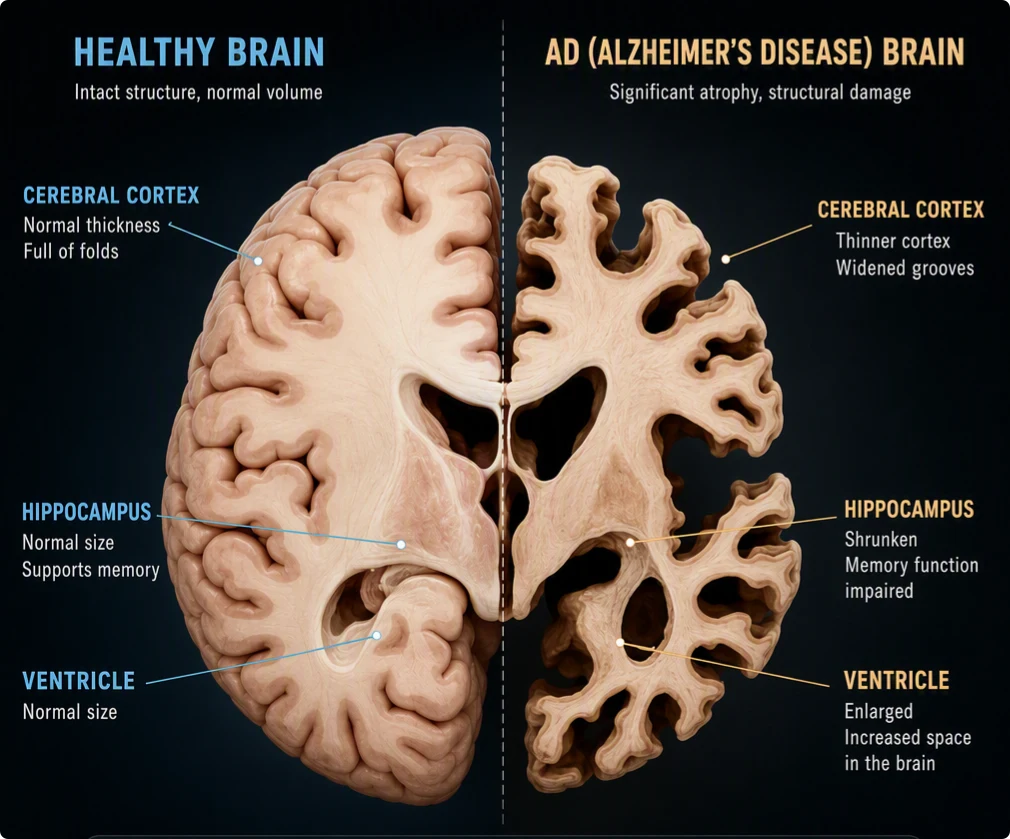
 LAYER / 01 RESOLVED
Organism
Disease phenotype
Resolve the anatomical and functional signatures that distinguish disease from health.
MindCell brings virtual cell modeling, disease phenotype intelligence, and specialized biomedical AI into one agent-orchestrated research environment.
Build a computable disease model across organism, cell, and molecule—then use the same biological model to screen interventions and identify therapeutic targets.
LAYER / 01 RESOLVEDResolve the anatomical and functional signatures that distinguish disease from health.
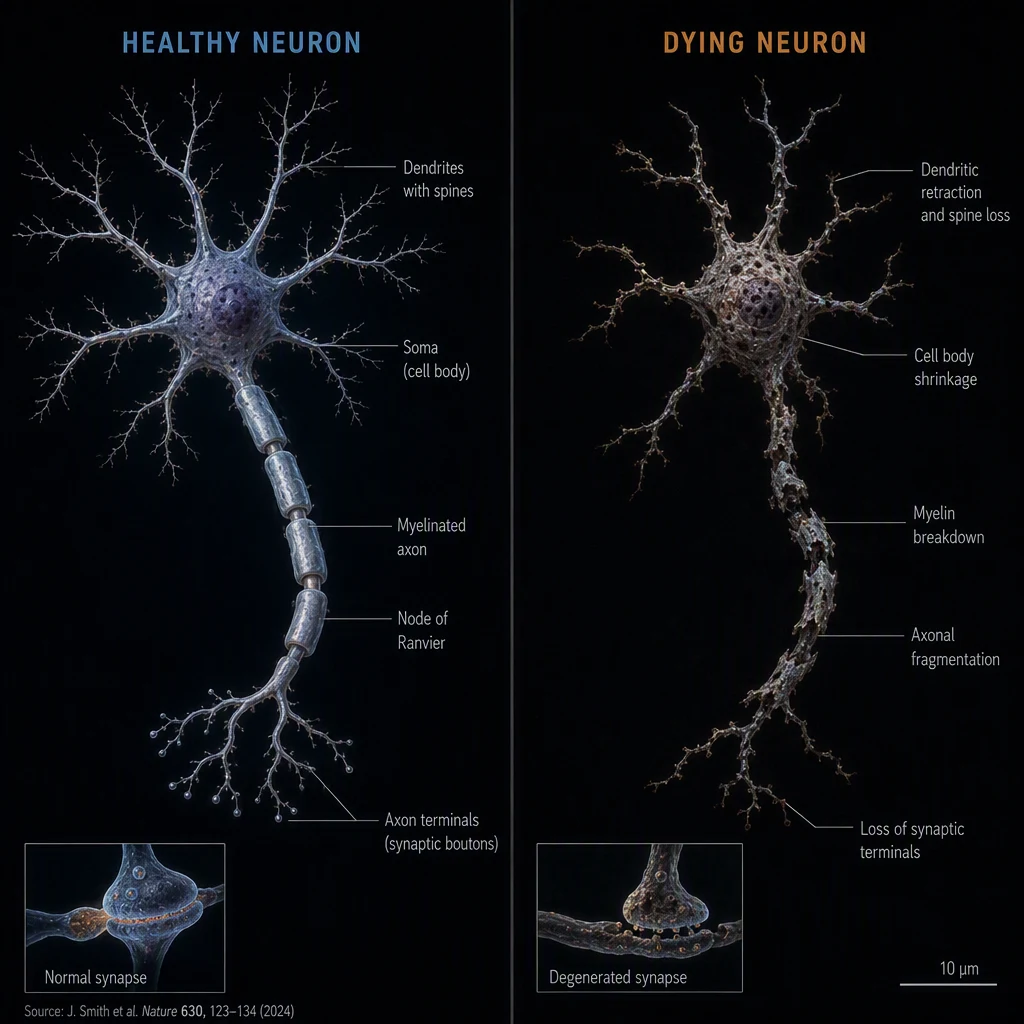 LAYER / 02 RESOLVED
Trace tissue-level change to the cell states, morphology, and functions that drive it.
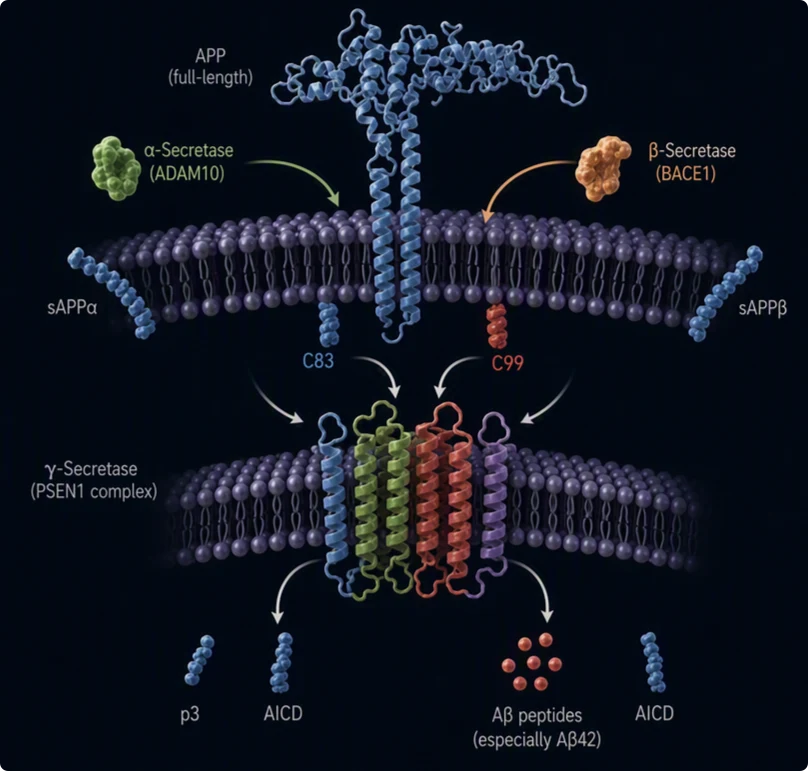 LAYER / 03 RESOLVED
Connect cellular dysfunction to actionable pathways, proteins, and molecular events.
Build a computable disease model from multimodal phenotype and patient evidence.
Run in-silico perturbations and prioritize compounds by phenotype rescue, not proxy alone.
Surface intervention points linked to mechanism, predicted response, and supporting evidence.
Traceable from phenotype to target.
Run proven biological AI models through one research interface. MindCell routes your question to the right specialist, keeps inputs and outputs together, and makes every result traceable.

Complex structure

Structure & affinity

Single-sequence folding

Protein dynamics

Open structure platform

Molecular docking

Neural docking

Generative design

Sequence design

Protein generation

Structure-aware protein LM

Protein language model

Genomic language model

RNA language model

RNA structure & design

Molecular foundation model
MindCell research blog
Static Aggrescan3D 1.0.2 analysis of the official RCSB Protein Data Bank structure 2GB1 produced finite scores for all 56 residues of chain A. The minimum score was −3.5629, the maximum was 1.1983, and the arithmetic mean was −1.4135875. The highest-scoring residue was valine A:21 at 1.1983; methion
Read article →02PyMOL 3.1.0 aligned the official RCSB/PDBe 1D3Z ubiquitin NMR structure as the mobile object to the official RCSB 1UBQ X-ray ubiquitin structure as the target. The exact cmd.align return was [0.39735108613967896, 449, 5, 1.2869186401367188, 602, 381.0, 76]: refined RMSD 0.397351 Å across 449 atom pa
Read article →03The validated workflow selected the IQ-TREE model from the supplied alignment, rooted the analysis with AVR-Mgk5GE162, reconstructed 13 ancestral records, and produced all six required final deliverables. The sorted state table contained 68,807 bytes of explicit state probabilities; intermediate IQ-
Read article →04ANARCI recognized a human kappa light chain spanning residues 0–106. The retained HMM score was 197.0 with an e-value of 1.6 × 10⁻61, and the assigned germlines were IGKV1-1201 and IGKJ101. Both the Kabat-numbered CSV and the HMM evidence table passed semantic validation. This result passed native e
Read article →05The model predicted logS values of −0.0424460527 for ethanol, −1.9325820263 for benzene, and −2.3143366025 for octanol. The expected ordering ethanol benzene octanol was recovered, and the output retained molecular weight, LogP, rotatable bonds, aromatic proportion, SMILES, and units. This result pa
Read article →06GRNBoost2 returned eight ranked transcription-factor–target edges. Both planted relationships, TF1→targetTF1 and TF2→targetTF2, were recovered. The summary retained the expression dimensions, regulator list, seed 777, top edge, recovery flags, and the explicit statement that importance is predictive
Read article →07The workflow created a synthetic T1w image, a four-volume resting-state BOLD image, events, sidecars, participant metadata, and dataset metadata. PyBIDS recovered the subject, task, BOLD file, inherited repetition time, and NIfTI shape. The inventory contained 12 rows and the real BIDS validator ret
Read article →08A validated Datamol workflow standardized six named SMILES records, calculated molecular weight, cLogP, hydrogen-bond donor and acceptor counts, and topological polar surface area, generated 2048-bit radius-2 ECFP fingerprints, calculated a symmetric 6 × 6 distance matrix, assigned every molecule to
Read article →09DockQ 2.1.3 selected the AB:AB model-to-native mapping and returned DockQ 1.000, iRMSD 0.000 Å, LRMSD 0.000 Å, fnat 1.000, F1 1.000, and zero clashes. These exact values are expected because the synthetic model coordinates are identical to the native fixture. This result passed native execution, rea
Read article →10Electronic-structure calculations turn a molecular geometry, charge, multiplicity, method, and basis set into quantitative predictions about electrons and energy. This worked example uses Psi4 1.11 to perform a restricted Hartree–Fock single-point calculation with the STO-3G basis for neutral single
Read article →11Molecular electrostatic potential, commonly abbreviated ESP, describes the interaction energy per unit positive test charge at positions around a molecule. It combines the attractive contribution of the nuclei with the repulsive contribution of the electron density, producing a spatial field that he
Read article →12Two protein sequences that differ at only one residue can be compared in several scientifically distinct ways. A global alignment asks how well the complete sequences correspond from end to end, whereas a local alignment asks for the best matching subsequences. Format conversion is a separate operat
Read article →13R-group enumeration generates a virtual compound library by combining a shared molecular scaffold with a defined set of substituents at labeled attachment positions. In the validated example documented here, a phenyl scaffold containing one dummy atom was combined with methyl, amino, and hydroxy sub
Read article →14IgBLAST annotates an immunoglobulin or T-cell receptor sequence by comparing it with curated germline V, D, and J gene databases and by locating the junction, complementarity-determining regions, and framework regions. In the worked mouse immunoglobulin heavy-chain example below, IgBLAST 1.22.0 assi
Read article →15The National Cancer Institute Imaging Data Commons provides public radiology, pathology, and derived imaging data with searchable metadata and explicit licensing. A reproducible download begins with a narrow metadata query, not a bulk transfer: identify the exact series, inspect its modality, instan
Read article →16Direct answer: The validated document triage found 18 of 26 expected procedure topics, leaving 8 missing topics and a descriptive coverage value of 69.2%. This is a reproducible gap-screening result, not certification, legal advice, or a conformity determination.
Read article →17Three spectra were parsed: two references and one query. Exact greedy cosine returned zero because every query fragment was shifted by 2 Da. Modified cosine accounted for the precursor shift and matched the caffeine reference with score 0.9999999999999999 and five matched peaks; the unrelated refere
Read article →18GROMACS 2024.5 completed steepest-descent minimization in 27 steps. Potential energy fell from 136.938477 to -0.972452 kJ/mol, and the run reported convergence. Native EDR, TRR, and GRO deliverables were reopened successfully. This result passed native execution, real chat-driven execution, and sema
Read article →19OpenMM 8.3.1 selected the CPU platform. Minimization reduced potential energy from 4.5 kJ/mol to 3.8518598887744717e-32 kJ/mol; after 20 one-femtosecond Langevin-middle steps, potential energy was 5.680147519456703e-05 kJ/mol. Two final three-dimensional positions were retained in nanometres. This r
Read article →20Five input rows yielded four valid structures and one explicit invalid-SMILES error. Three of four valid structures passed Rule of Five, Veber, PAINS, common-alert, and NIBR checks. Rhodanine failed PAINS and NIBR checks; the long alkane failed Rule of Five, Veber, and common-alert checks. This resu
Read article →COSINX
For research partnerships, scientific collaboration, and MindCell enquiries, contact our team directly.
research@cosinx.com